


A Classical Foundation
FLORIAN TOMBALLE AT HOLLAND PARK GATE
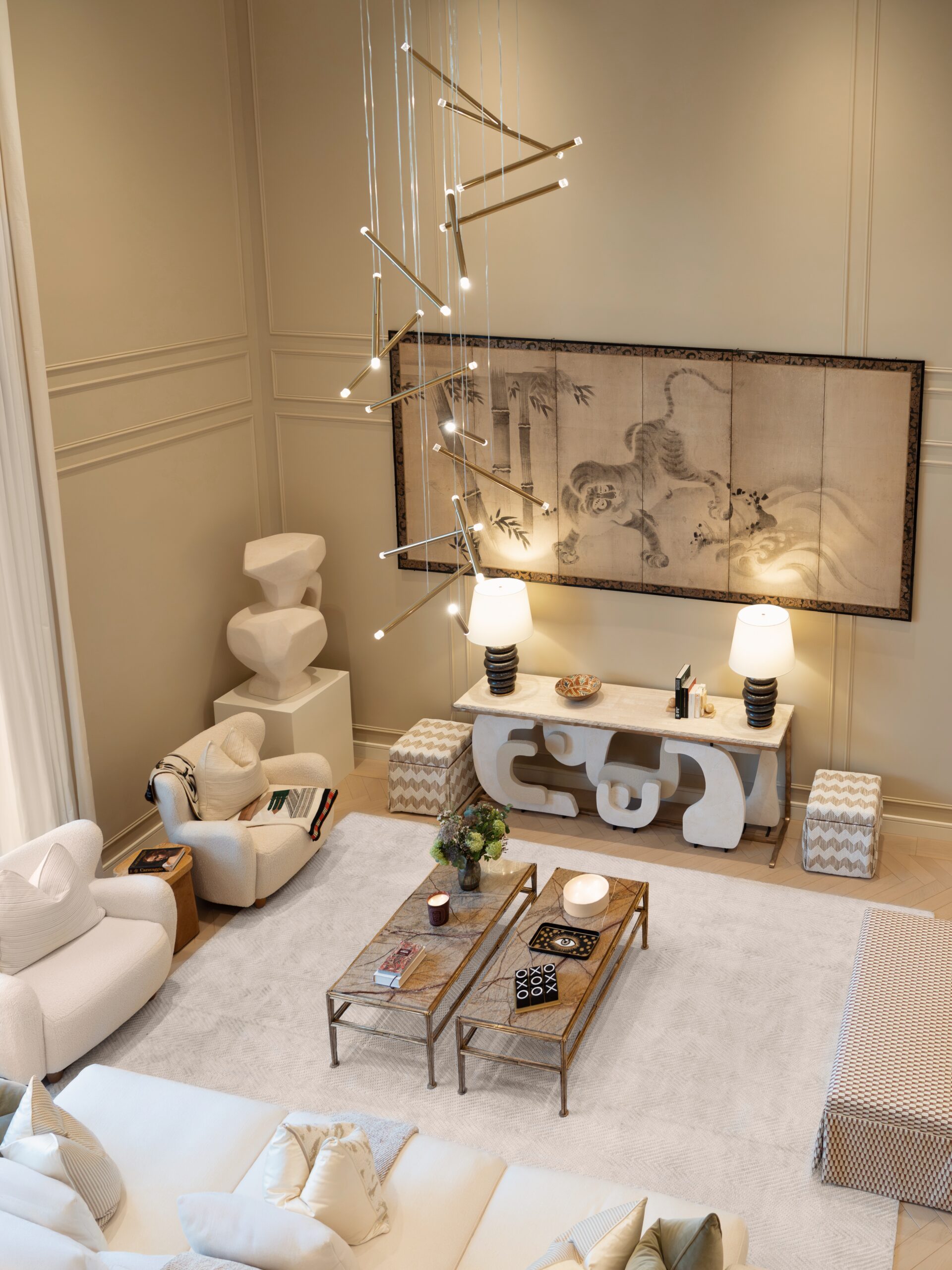
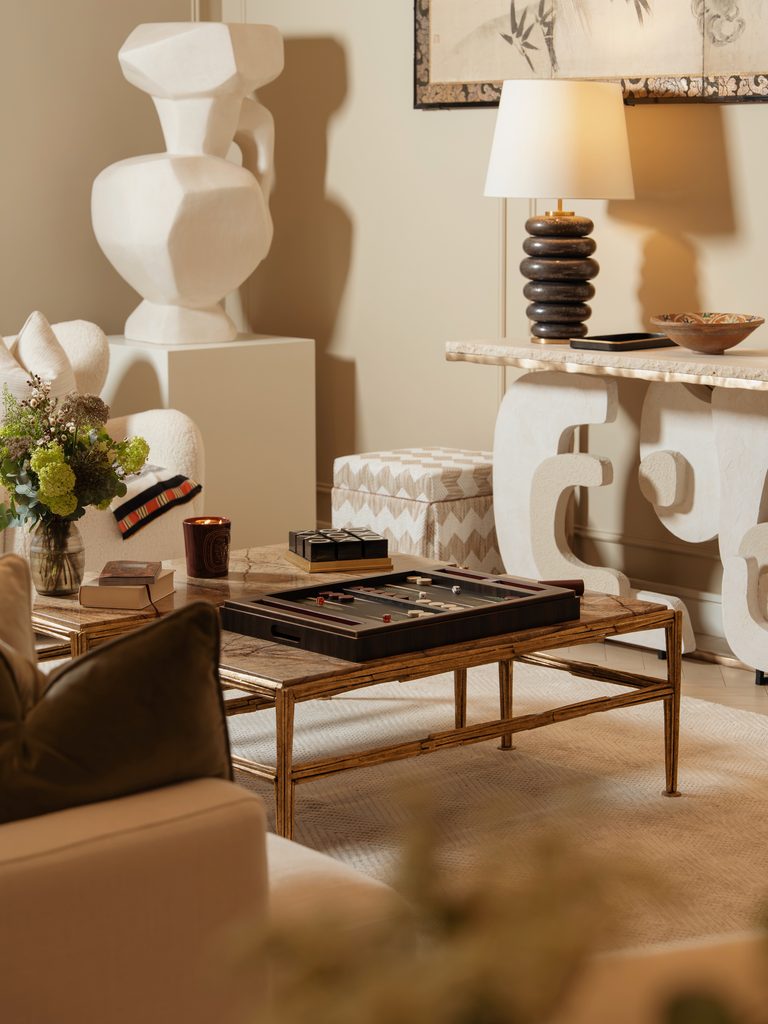
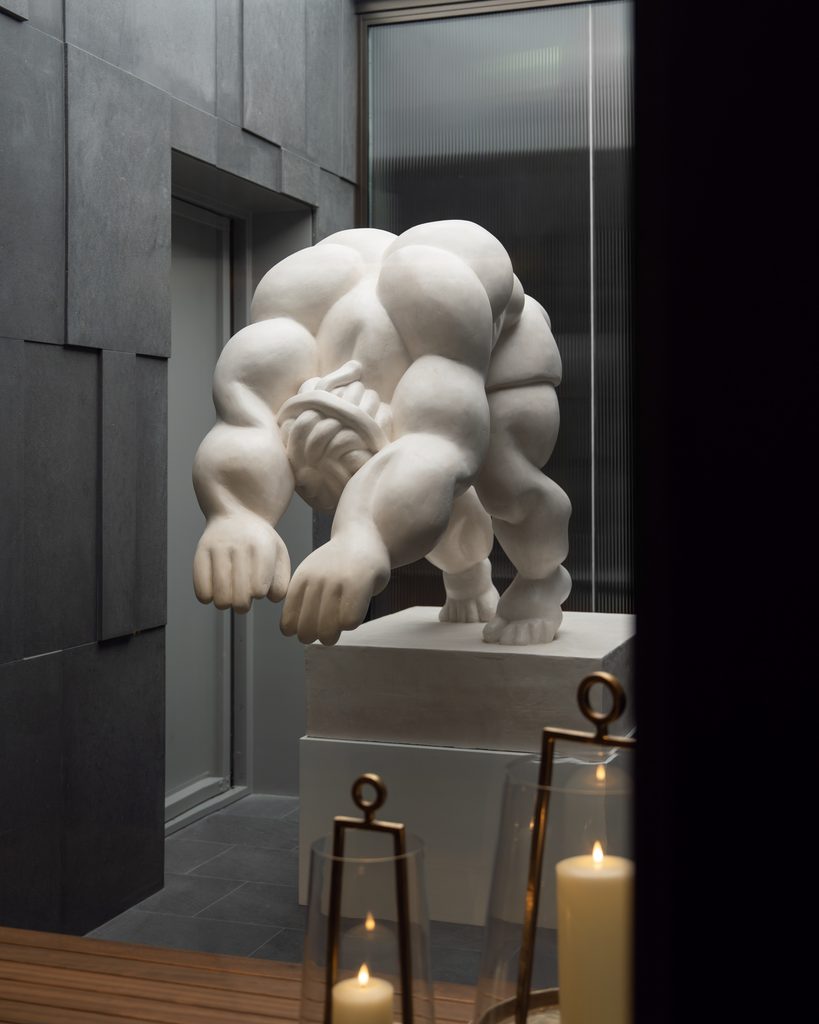
At Holland Park Gate, Florian Tomballe’s sculptures appear in very different settings. A monumental diver seems poised to plunge into the swimming pool; a vessel-like figure holds its own among the art and furniture of Residence 64; and in Residence 85, a larger-than-life figure raises a hand, part classical sculpture, part contemporary character.
They are playful, imposing and surprisingly companionable. For Tomballe, that ability to command a space without overwhelming it is fundamental.
“Whether classical, deconstructed or abstract, for me a sculpture’s quality comes from its energy and form. If it holds magnetism, a silent power, an unintrusive presence. It’s something that requires no words to be felt.”
Born in Belgium in 1988, Tomballe trained as a sculptor at the Royal Academy of Fine Arts Antwerp. His early practice was rooted in classical sculpture and human anatomy, before evolving towards the abstract, exaggerated forms for which he is known today. The human body remains central, but proportion is something to be played with rather than obeyed.
Knowing, then letting go
That classical foundation is still visible in the works at Holland Park Gate. Bodies and gestures remain recognisable, but are enlarged, compressed and reassembled into something less expected.
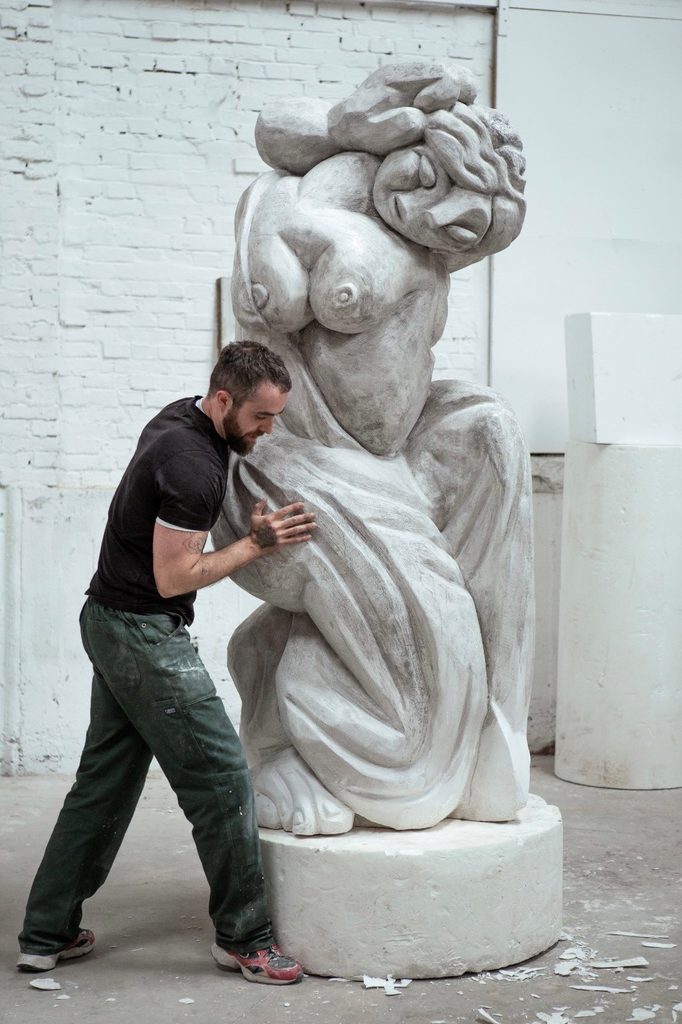
Tomballe looks to the Kouros and Kore of ancient Greece, alongside modernists including Picasso and Constant Permeke. “It’s the freedom of playing with forms that I enjoy so much in the modernists, versus the endlessness of ancient art, a world that seems to last forever, never going in or out of fashion.”
His approach to connoisseurship follows a similar tension between knowledge and instinct.
“I often admire children’s artworks, and one could say they work without connoisseurship. For myself, the art lies in finding the balance between what you know and letting go of that. As Picasso said, it took him a lifetime to paint like a child.”
Listening to the work
Tomballe rarely begins with a fixed destination, preferring to respond intuitively as a sculpture develops. “Some works finish sooner than expected, others later. When you know, you know.”
Material is approached with the same freedom. “You can just as easily make a masterpiece out of cardboard as a bad piece out of marble. What matters is staying true to the nature of the material and not trying to disguise it.”
Drawing offers another route into his visual language. Tomballe calls drawing and sculpture “two different languages speaking the same words”. His drawings are rarely preparatory studies, but allow him to develop forms quickly that can, in turn, redirect his sculpture.
Living with sculpture
At Holland Park Gate, the works have moved from studio and gallery into everyday life, each acquiring a different character from its surroundings.
In Residence 64, Tomballe’s vessel-like sculpture sits among furniture, textiles and collected pieces. In Residence 85, the raised hand of another figure gives it an almost human sociability, as though acknowledging whoever enters the room.
The diver in the Health Club & Spa is perhaps the most playful. Caught at the instant before a plunge, its enormous body folded forward above the pool, it brings humour and movement to the space and has become a much-enjoyed presence.
It is fitting that Tomballe’s sculptures should become familiar characters within Holland Park Gate. Asked what he hopes someone living with one of his works will continue to find in it over time, his answer is characteristically simple:
“I hope they continue to feel like it has always been there and always will be.”
The Connoisseurship Issue
Next Article – The Frieze Table
London’s leading makers and maisons remind us that the most memorable Christmas gifts speak to personal connection. From bespoke scents to fine-bound books, here’s how to select items that will be treasured for years to come